There is a strange expectation in the world that certain people are supposed to be strong all the time.
Not strong in the healthy sense of resilience, but strong in a quieter, more exhausting way. The kind of strength where you absorb things without reacting. Where you hold your emotions in place so other people can feel comfortable. Where you become the person others rely on because they assume you can handle it.
And after a while, people stop asking if you’re okay.
They just assume you are.
I’ve noticed that the people who appear the strongest are often the ones who learned very early that showing vulnerability came with consequences. Maybe they grew up in environments where emotions were dismissed or ignored. Maybe they were the ones others leaned on during difficult moments. Maybe they were praised for being “mature” or “independent” long before they were ready to carry those roles.
Over time, that expectation turns into identity.
You become the reliable one. The calm one. The one who doesn’t break down when things get difficult.
And eventually people start believing that nothing really affects you.
What they don’t see is that strength, when it becomes performance, can be incredibly isolating.
When people believe you’re always okay, they stop looking closely. They stop asking deeper questions. They stop noticing the small signs that you might need support too.
And sometimes the strongest people unintentionally reinforce this belief. They’ve spent so long managing their emotions privately that vulnerability begins to feel unnatural. Even dangerous.
It’s easier to say “I’m fine.”
It’s easier to keep the performance going.
What fascinates me is that many people who appear strong are actually just very skilled at carrying pain quietly. They’ve learned how to process difficult emotions internally without asking others to hold any of that weight.
From the outside, it looks like resilience.
From the inside, it can feel like loneliness.
The strange part is that most people don’t consciously choose this role. It develops slowly through years of small experiences that teach someone which parts of themselves are safe to show and which parts are better hidden.
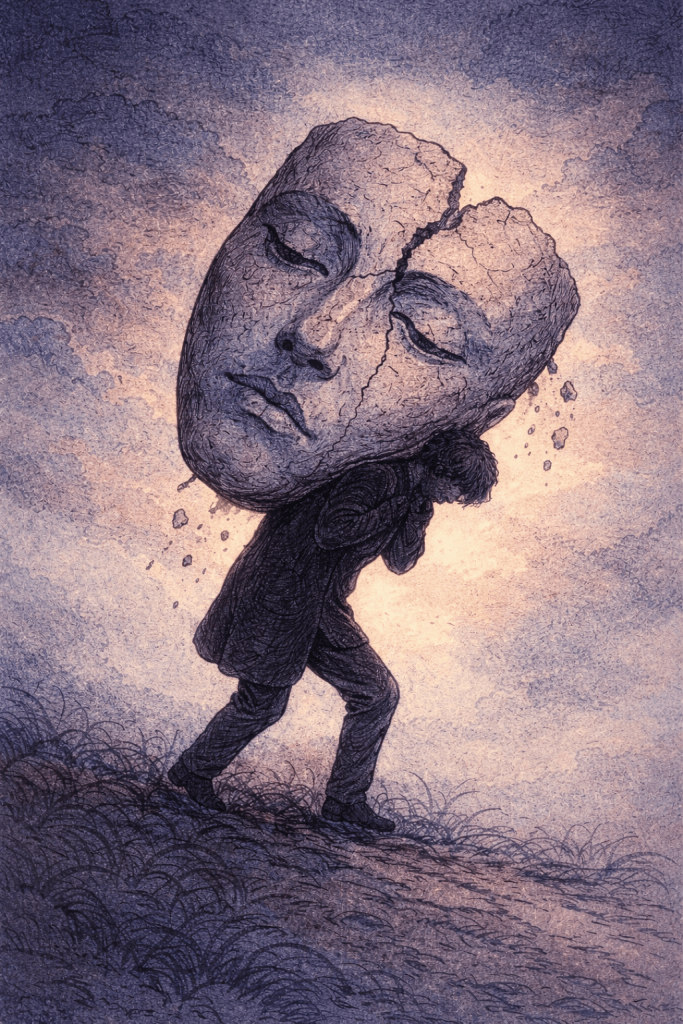
Strength becomes armor.
And armor works well for protection, but it also creates distance.
The deeper truth is that real strength probably looks very different than what most people imagine. It’s not the ability to carry everything alone without breaking.
It’s the ability to let yourself be seen when things are heavy.
To admit when you’re struggling instead of pretending you’re unaffected.
To allow someone else to help carry the weight for a moment.
That kind of strength is quieter and less impressive on the surface.
But it’s also far more human.
 Probably Overthinking
You must be logged in to post a comment.