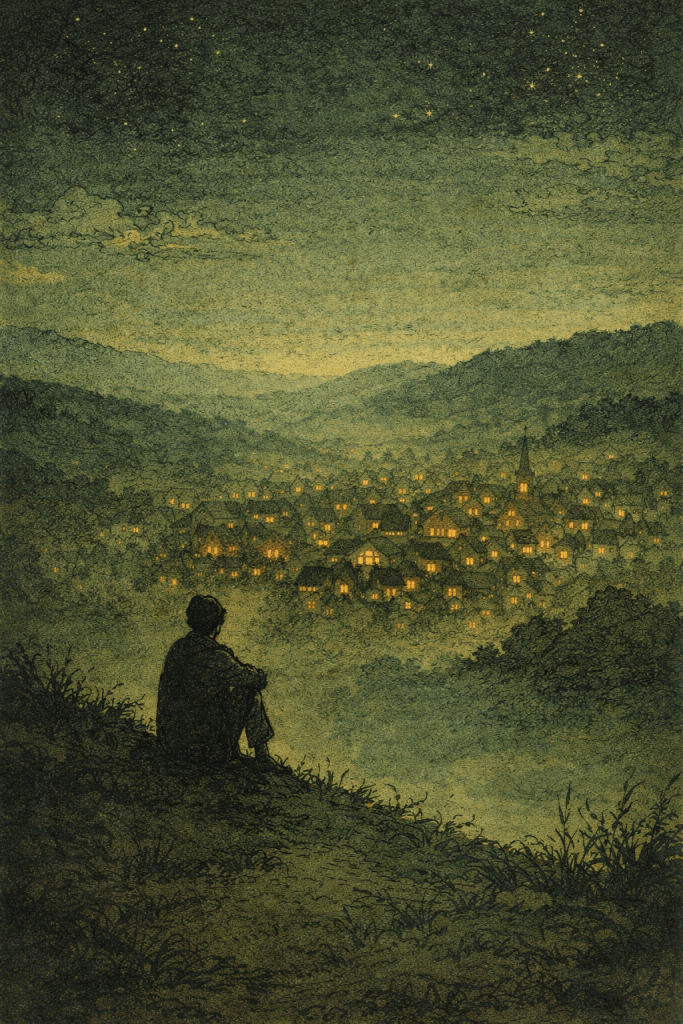
There is something endlessly fascinating about watching people exist without realizing they are being watched, not in the sense of surveillance, but in the quiet noticing that happens when you sit still long enough. Humans reveal themselves the most honestly in the in between moments. The way someone hesitates before speaking, the unconscious softening of their face when a stranger smiles, the invisible negotiations happening in crowded spaces as bodies adjust to avoid collision.
We like to believe we are guided by intention, yet so much of what we do seems choreographed by habit, fear, or longing. People check their phones not always because they expect something, but because absence feels heavier than possibility. Conversations drift toward the familiar, as though we are actors reciting lines inherited from generations before us. Even silence carries patterns, some sit comfortably within it, others rush to fill it as if quiet might expose something unfinished inside them.
What strikes me most is how similar we are beneath our carefully assembled differences. Everyone seems to be balancing two opposite desires, to be seen clearly and to remain protected from being fully known. We perform versions of ourselves that feel safe, adjusting depending on who is watching, yet occasionally a genuine moment breaks through, a laugh too loud, a confession slipped out accidentally, a look that reveals more than words ever could.
Perhaps observation itself is an act of empathy. To watch closely is to recognize that every person is the center of their own unfolding story, carrying invisible histories that shape even the smallest gestures. The world becomes quieter when you realize that what appears ordinary is actually layered with private meaning.
And maybe wisdom is not learning to understand people completely, but learning to remain curious about the mystery they carry.
If observation begins with curiosity, it eventually arrives at discomfort. The longer you watch people, the more you notice the small fractures beneath the surface, the exhaustion hidden behind politeness, the way laughter sometimes sounds like a shield rather than joy. Humans move through their lives as though permanence were guaranteed, yet everything about them speaks of fragility. Even confidence feels temporary, like a mask held in place by habit.
There is a strange loneliness in recognizing patterns. We repeat ourselves endlessly, the same mistakes dressed in new circumstances, the same desires renamed to feel original. We seek meaning while simultaneously distracting ourselves from the silence where meaning might have to be built rather than found. It is easier to scroll, to speak, to consume, anything to avoid confronting the vast, unstructured space of existence where no script is provided.
And yet, despite this awareness, people continue. They wake up. They try again. They carry invisible weights while still offering kindness in fleeting, almost accidental ways. Someone holds a door open without expecting gratitude. Someone listens a little longer than they have to. These moments are small enough to go unnoticed by history, but they resist the darkness in quiet defiance.
Perhaps existential awareness is not a descent into despair but an invitation to honesty. If nothing is guaranteed, then every act becomes strangely significant. A conversation matters because it will end. A relationship matters because it is temporary. Even suffering carries a strange clarity, it strips away illusion and forces us to see what remains when comfort dissolves.
Hope, then, is not optimism. It is not the belief that things will become easier or more meaningful on their own. Hope is the decision to participate anyway. To keep choosing connection despite knowing loss is inevitable. To create meaning in a universe that offers none freely.
Maybe that is what makes humans remarkable, not that they escape darkness, but that they learn to walk through it while still searching for light, and sometimes, quietly, becoming it for each other.
 Probably Overthinking
You must be logged in to post a comment.